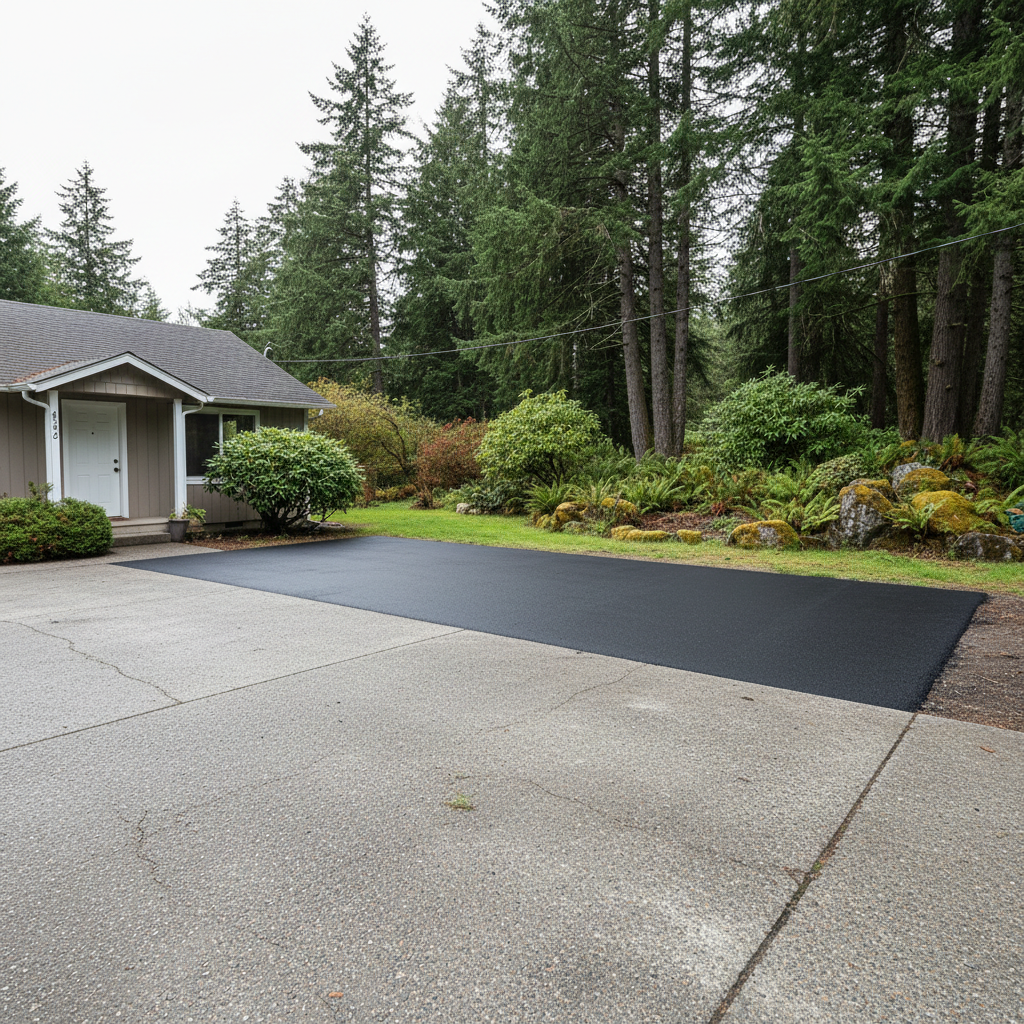
Nobody wants to see their asphalt driveway or parking lot start falling apart. Cracks, potholes, and crumbling edges aren't just an eyesore; they're tripping hazards and can quickly lead to bigger, more expensive problems down the road. So, what's it really going to cost you to get things fixed up right here in Naselle?
You've probably heard the old line, "it depends." And, yeah, it does. But I'm not going to leave you hanging with just that. I'm going to give you some actual numbers and explain what makes those numbers jump up or down.
What Makes Asphalt Repair Costs Change?
A few main things really drive the price of an asphalt repair job. Knowing about these will help you understand what to expect when you get a quote from us.
- The Type of Damage: Is it a tiny crack you can barely spot, or a giant pothole that practically swallowed your neighbor's mail? Different damage needs different fixes, plain and simple. Potholes often mean we'll saw-cut and patch, while that "alligator cracking" might need a larger mill-and-fill or even a small overlay.
- Size and Depth: This one's pretty straightforward. A bigger, deeper repair means more material and more labor, right? A 10-square-foot patch is a lot less work than a 100-square-foot section.
- Accessibility: Can we easily get our equipment to the repair area? If it's a tight spot, say a narrow driveway with overgrown bushes, it just takes longer. Sometimes it even requires more manual labor, which can definitely bump up the cost.
- Sub-base Condition: This is a big deal. Sometimes, the asphalt itself isn't the only problem. If the gravel base underneath has failed, just patching the surface won't hold up. We'll need to dig deeper, remove that bad base material, and replace it. That's more work, more material, and more cost. In our neck of the woods, with all the rain we get—especially in places like the low-lying areas near the Naselle River—sub-base issues from water saturation happen quite a bit.
- Material Costs: Asphalt, like everything else, has fluctuating material costs. We're talking about petroleum products, so prices can shift.
- Equipment and Labor: Our crew and specialized equipment aren't cheap to run. Good, experienced guys who know what they're doing are worth every penny, and that's reflected in the price.
Typical Repair Cost Ranges in Naselle
Alright, let's get to some actual numbers. Remember, these are averages, and your specific job could be higher or lower depending on those factors I just mentioned.
- Crack Filling: For simple crack filling, where we clean out and fill individual cracks, you're usually looking at a per linear foot cost. For minor cracks (1/4 to 1/2 inch wide), expect to pay around $1.50 to $3.00 per linear foot. If the cracks are wider or deeper, needing more material and prep, it might go up to $4.00-$6.00 per linear foot. Most small residential driveways might run $200-$500 for a thorough crack fill.
- Pothole Repair (Patching): We usually price this by the square foot, but there's often a minimum charge. Why? Because of the setup and travel time involved. For smaller potholes (under 10 sq ft), you might pay anywhere from $150 to $350 for a single repair. For larger areas or multiple potholes, expect $8-$15 per square foot. If the sub-base needs repair, that cost can jump to $20-$30 per square foot for that specific area.
- Alligator Cracking/Section Replacement: When you've got a whole section that looks like an alligator's back, it's usually beyond just filling. We'll cut out the bad section, remove it, repair the base if needed, and then put down new asphalt. This type of repair can range from $10 to $25 per square foot, again, depending heavily on the depth of the repair and if the base is compromised. A small 50 sq ft section could run you $500-$1250.
- Asphalt Overlay (Small Areas): Sometimes, if the damage is widespread but not too deep, a thin overlay (1-2 inches) might be an option for a small section. This is less common for